

 Click image to view full size image


Reforming Catalyst /Reformate Refined Catalyst / Catalytic Reformer/ Continuous Catalyst Regeneration/ catalyst manufacturers
/Alternative of activated clay/ Long operating cycles/ Capital saving/ Energy and Emission Reduction
Quick Details
Three patents, four authoritative certification
An alternative Refining catalyst to clay processing in reformate
High-performance and highly stable catalyst.
Alternative of activated clay
Reduced solid waste
Long operating cycles
Continuous Catalyst Regeneration
Capital saving
Catalytic Reforming Catalyst For Removal Of Olefins In Reforming Aromatics
Description
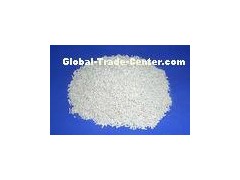
RS-T-1-01 Catalysts for Removal of Olefins in Reforming Aromatics is the main replacement of activated clay employed in the pre-treatment equipments of PX process to remove the olefins from C8+ mixed aromatics. It is featured as wide operating temperature range, long life cycle and repeated regeneration capability.
1. Main Advantages of RS-T-1-01 Catalysts for Removal of Olefins in Reforming Aromatics
Due to frequent replacement, clay waste pollution, reduced clay resources and high security risks in frequent replacement, high activity Refining catalyst has become an inevitable choice to replace the conventional activated clay adsorbents.
Compared to the conventional activated clay adsorbents, RS-T-1-01 Refining catalyst has the following major advantages:
1.1 Longer cycle life
Under the same conditions of use, single cycle life is more than 8 times that of clay;
1.2 Wider temperature Range
RS-T-1-01 Refining catalyst can be activated at the temperature of 130 .
1.3 Repeated regeneration
The catalyst can be used repeatedly by regeneration, thus the solid waste emissions will be reduced from 85% to 90%;
1.4 Decreased Bromine Index (BI)
The BI decrease can protect the subsequent equipments, and the extended operating cycle can reduce the frequency of maintenance.
2. RS-T-1-01 Refining Catalyst Specifications Descriptions
2.1 What’s RS-T-1-01 Refining Catalyst Appliance Principle?
The core active component of RS-T-1-01 is molecular sieve.
As with activated clay, molecular sieves Refining catalyst also adsorb the olefins with stronger polarity in reforming aromatics through porous material, so as to achieve the purpose of refining. However, molecular sieves have a longer operation cycle life than clay due to higher acid content, better acid distribution, and stronger and more stable acidity ; , meanwhile, due to their unique nature, sieves can be repeatedly regenerated.
2.2 The Main Physical Indexes of RS-T-1-01 Refining Catalyst
The Main Physical Indexes of RS-T-1-01 Refining Catalysts are listed as follows . They can also be customized.
Table 2.1 Refining Catalyst Physical Indexes
| Items | Units | Indexes | |
| Shape | white strip | ||
| Diameter | mm | Φ23×515 | |
| Rate of Wear |
| ≤0.1 | |
| Compressive strength |
 Sell Sell
New Login
Company QR code Anytime Anywhere Mobile |
||